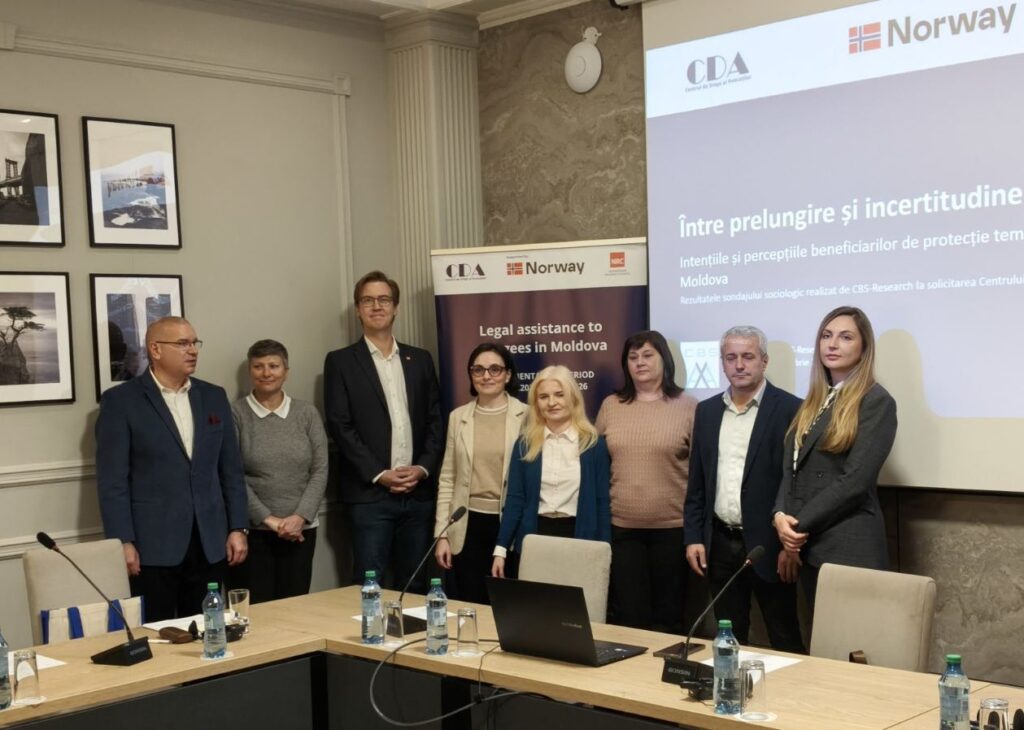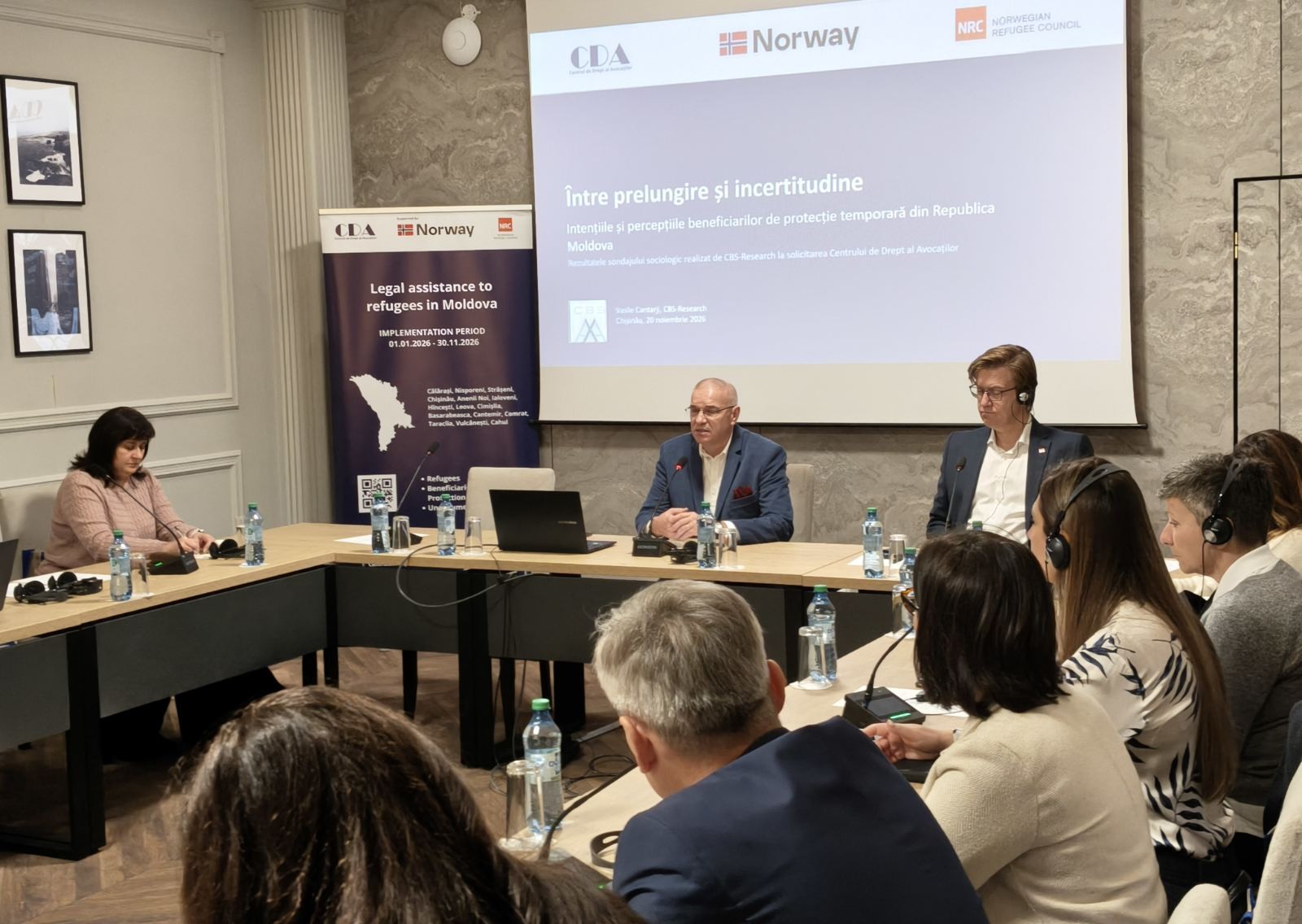
On 20 November 2026, the Law Center of Advocates (CDA) held an event to present the study “Transitioning from Temporary Protection in the Republic of Moldova: Beneficiaries’ Intentions and Options for Durable Solutions”, developed under the project “Legal assistance to refugees in Moldova”.
More than 62,000 people currently benefit from temporary protection in the Republic of Moldova. Its extension until March 2028, decided at the European Union level and proposed by the Moldovan authorities, provides more time but does not answer the question of what will happen to those who will be unable to obtain another legal residence status.
The research examines the options available to temporary protection beneficiaries after this status comes to an end, the obstacles that may limit their access to another legal residence status, and the measures needed to ensure that the transition is predictable, accessible and tailored to each person’s circumstances.
The study is based on a survey conducted by CBS-Research at CDA’s request in September 2026, through interviews with 224 adult beneficiaries assisted by the organization. It is complemented by data from the General Inspectorate for Migration and the UNHCR report published in May 2026. The findings reflect the situation of beneficiaries assisted by CDA and cannot be extrapolated to the entire temporary protection beneficiary population.
The survey shows that the prevailing intention is to wait: 55.8% of respondents intend to remain in the Republic of Moldova, but most plan to do so only until the situation in Ukraine improves, while 23.4% are considering returning. Thus, 94.4% would like temporary protection to be extended beyond 1 March 2028, and 64.8% would accept a transitional status. At the same time, 64.4% consider themselves poorly or not at all informed about the options available after temporary protection ends, while only 18.7% are formally employed, making a residence permit for employment purposes accessible to only a limited number of beneficiaries.
The study concludes that facilitating access to existing residence options is necessary but not sufficient: older people, families affected by disability and those with insufficient income risk being left without a realistic pathway to continue their lawful stay. CDA recommends that the authorities adopt at least one solution specifically designed for these groups, either a residence permit on “other justified grounds” or a transitional status; take the period spent under temporary protection into account when granting permanent residence and citizenship; establish safeguards for vulnerable people; ensure that beneficiaries receive timely and targeted information; and prepare a voluntary return programme, so that returning to Ukraine is the result of a free and informed decision.
During the event, the survey findings were presented by Vasile Cantarji, representative of CBS-Research, while the study’s findings and recommendations were presented by Olga Vacarciuc, CDA Human Rights Adviser.
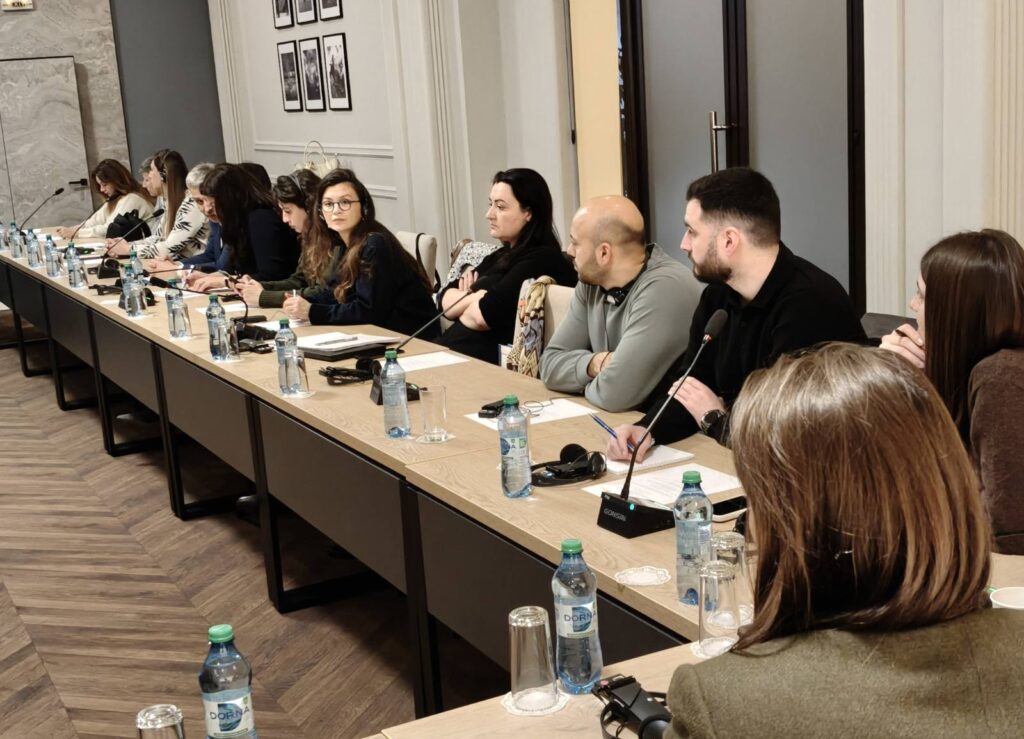
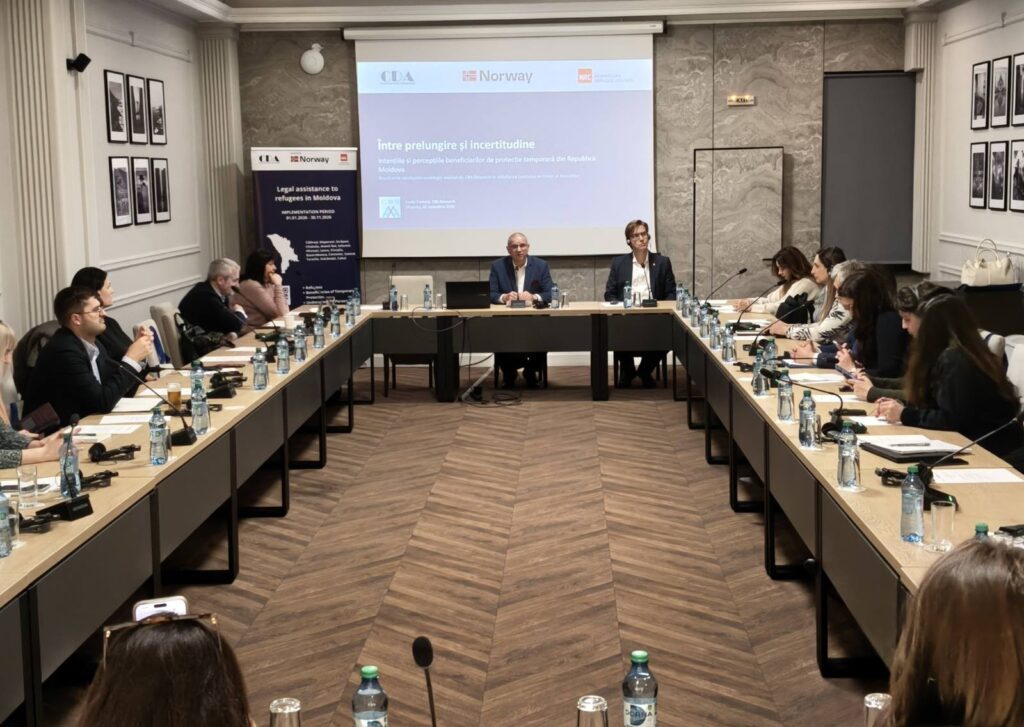
The event brought together representatives of public authorities responsible for migration and asylum, international organizations and civil society, who discussed the practical challenges of the transition and the need to coordinate efforts to identify solutions tailored to beneficiaries’ circumstances.
Speaking at the event, Neil Brighton, NRC Country Director in the Republic of Moldova, emphasized that as displacement from Ukraine becomes increasingly protracted, the issue is no longer only about emergency protection, but about ensuring that people can live with dignity, exercise their rights and make informed decisions about their future while the situation in Ukraine remains uncertain. According to him, perhaps the report’s greatest value lies in showing how temporary protection beneficiaries perceive their future and which solutions they consider realistic, accessible and desirable.
The study was developed under the project “Legal assistance to refugees in Moldova”, implemented by the Law Center of Advocates (CDA), with financial support from Norway and in partnership with the Norwegian Refugee Council (NRC).